

Mor Nutritional Products (Pty) Ltd
PROJECT NAME/ SITE:
Mor Nutritional Products (Pty) Ltd
--------------------------------------------------------
INDUSTRY:
Bioprospecting
--------------------------------------------------------
MAIN CONTACT PERSON:
Tshepiso Seloane & Thushego Mathabatha
--------------------------------------------------------
PROJECT LOCATION:
Stand No 490 Tooseng Village GaMphahlele, Lebowakgomo, Limpopo Province, South Africa
PROJECT PARTNERS:
- Wits University (research and product development)
- Agricultural Research Council (research and certification support)
- Local women's cooperatives (sourcing prickly pear and other ingredients)
- University of Limpopo (Ubuntu BIO-based innovation initiative)
- Limpopo Resource Centre (distribution support)
--------------------------------------------------------
Investment Range / ROI
Public or Private Sector
This is a Private Sector Opportunity
Environment
- Sequestration of 50+ tonnes of CO2 annually through moringa cultivation, with cumulative impact reaching 88 tonnes by 2027
- Improvement of soil health across 50 hectares through organic practices, with a 15% average increase in soil organic matter
- Conservation of 1 million+ litres of water annually through efficient cultivation practices compared to conventional agriculture
- Elimination of chemical runoff into local waterways through organic cultivation methods
- Maintenance of habitat for 20+ pollinator species, supporting broader ecosystem resilience
- Zero waste to landfill through comprehensive circular economy approaches
Social Impact
- Distribution of 100,000 nutrient-rich product units annually by 2027, addressing nutritional deficiencies in communities
- Reduction in school absenteeism by approximately 10% in communities where moringa supplements are consistently used
- Creation of viable rural livelihoods that reduce urban migration pressures
- Enhancement of women's economic empowerment, with female participants reporting 40% greater decision-making authority within households
- Transfer of sustainable agricultural knowledge to 200+ community members annually through training initiatives
- Preservation and commercial application of Indigenous knowledge systems, creating intergenerational knowledge transfer
PROJECT STATUS :
Existing Business
MAIN CONTACT DETAILS:
| Business Owner | Business Owner | ||
| Name: Tshepiso Seloane | Name: Thushego Mathabatha | ||
| Capacity: Business Owner | Capacity: Business Owner | ||
| Tel No: +27 66 345 6558 | Tel No: +27 64 545 8158 | ||
| Email: tshepiso@mornutri.co.za | Email: thusego@mornutri.co.za | ||
| Website: www.mornutri.co.za | |||
DESCRIPTION OF THE BIODIVERSITY INVESTMENT OPPORTUNITY
trees stabilise soil and prevent erosion—a critical benefit in Limpopo's erosion-prone landscape. The zero-waste approach utilises every part of the plant—leaves for teas, seeds for oils, and waste for compost—minimising environmental degradation and fostering a circular economy.
From a social impact perspective, Mor Nutri employs a workforce that is 90% youth and 70% women, addressing Limpopo's high unemployment rates. Structured partnerships with local women's cooperatives for sourcing indigenous ingredients like prickly pear create additional economic opportunities in marginalised communities. These partnerships provide community-based producers fair wages, skill development, and market access.
The business has achieved significant market traction, with secured letters of intent from the Tara Mushade Group of Hotels for placement in five lodges and advanced discussions with premium establishments such as Tintswalo in Kruger National Park. Additionally, the company has established a network of distributors operating on a multi-level marketing model, reaching customers across multiple regions.
This investment opportunity seeks R770,256 to scale operations through strategic investments in equipment upgrades, distribution infrastructure, and e-commerce capabilities. These investments will enhance production capacity, improve distribution efficiency, and establish direct-to-consumer channels, supporting projected revenue growth from R493,900 in 2024 to R1,355,262 by 2027.
PROBLEM THE PROJECT IS ADDRESSING
Mor Nutri addresses several interconnected environmental, social, and economic challenges in South Africa's Limpopo Province:
High Unemployment:
With provincial unemployment rates exceeding 30% (Statistics South Africa, 2023) and youth unemployment reaching as high as 40% in rural areas, Mor Nutri creates meaningful employment opportunities with a specific focus on youth and women, two particularly vulnerable demographics. The integrated business approach combines direct employment with support for cooperatives and small-scale farmers, creating a multi-layered economic impact.
Nutritional Deficiencies:
Malnutrition affects over 25% of South African children (UNICEF, 2022), with micronutrient deficiencies particularly prevalent in rural communities. With its exceptional nutritional profile, including high levels of vitamins A, C, iron, and complete amino acids, Moringa offers an accessible, locally grown solution to nutritional challenges. The company's innovative product formats make these nutritional benefits available to consumers.
Soil Degradation:
Over 60% of Limpopo's agricultural land suffers from erosion and nutrient depletion (Department of Agriculture, 2021), threatening long-term agricultural productivity and ecosystem health. Moringa cultivation actively counters this degradation through deep root systems that stabilise soil structure, improve water infiltration, and enhance organic matter content through leaf drop and mulching.
Water Scarcity:
Limpopo Province receives annual rainfall of approximately 400-600mm, below the national average, creating persistent water stress. Moringa's exceptional drought tolerance—requiring just 4 litres of water per tree weekly compared to 20 litres for maise—offers a water-efficient agricultural alternative suited to the region's climatic conditions.
Biodiversity Loss:
Conventional agricultural practices, including monocropping and chemical inputs, threaten local biodiversity, pollinators, soil organisms, and native plant species. Mor Nutri's organic cultivation practices and buffer zones support ecosystem health while integrating indigenous ingredients to promote biodiversity conservation through economic incentivisation.
Limited Value Addition:
Raw agricultural products typically generate minimal economic returns, restricting rural development potential. Mor Nutri's processing and product development activities create substantial value addition within the local economy rather than exporting raw materials for processing elsewhere.
Market Access Barriers:
Small-scale producers in rural areas face significant challenges accessing viable product markets. Mor Nutri's partnerships with women's cooperatives and local farmers create structured market opportunities, providing stable income through fair purchasing commitments.
By simultaneously addressing these interconnected challenges, Mor Nutri demonstrates how thoughtfully designed agricultural enterprises can generate positive environmental, social, and economic outcomes rather than forcing trade-offs between these dimensions.
WHAT IS THE PROPOSED SOLUTION (OR NATURE OF BUSINESS)?
Mor Nutri offers a comprehensive solution that integrates environmental sustainability, nutritional innovation, and inclusive economic development:
Sustainable Cultivation:
The company employs organic growing practices for moringa trees, eliminating synthetic pesticides and fertilisers that can harm ecosystems. Water conservation is embedded throughout the cultivation process, with efficient drip irrigation systems and rainwater harvesting that reduce consumption by up to 70% compared to conventional agriculture. The cultivation approach adheres to South African Organic Sector Organisation (SAOSO) standards and principles.
Zero-Waste Processing:
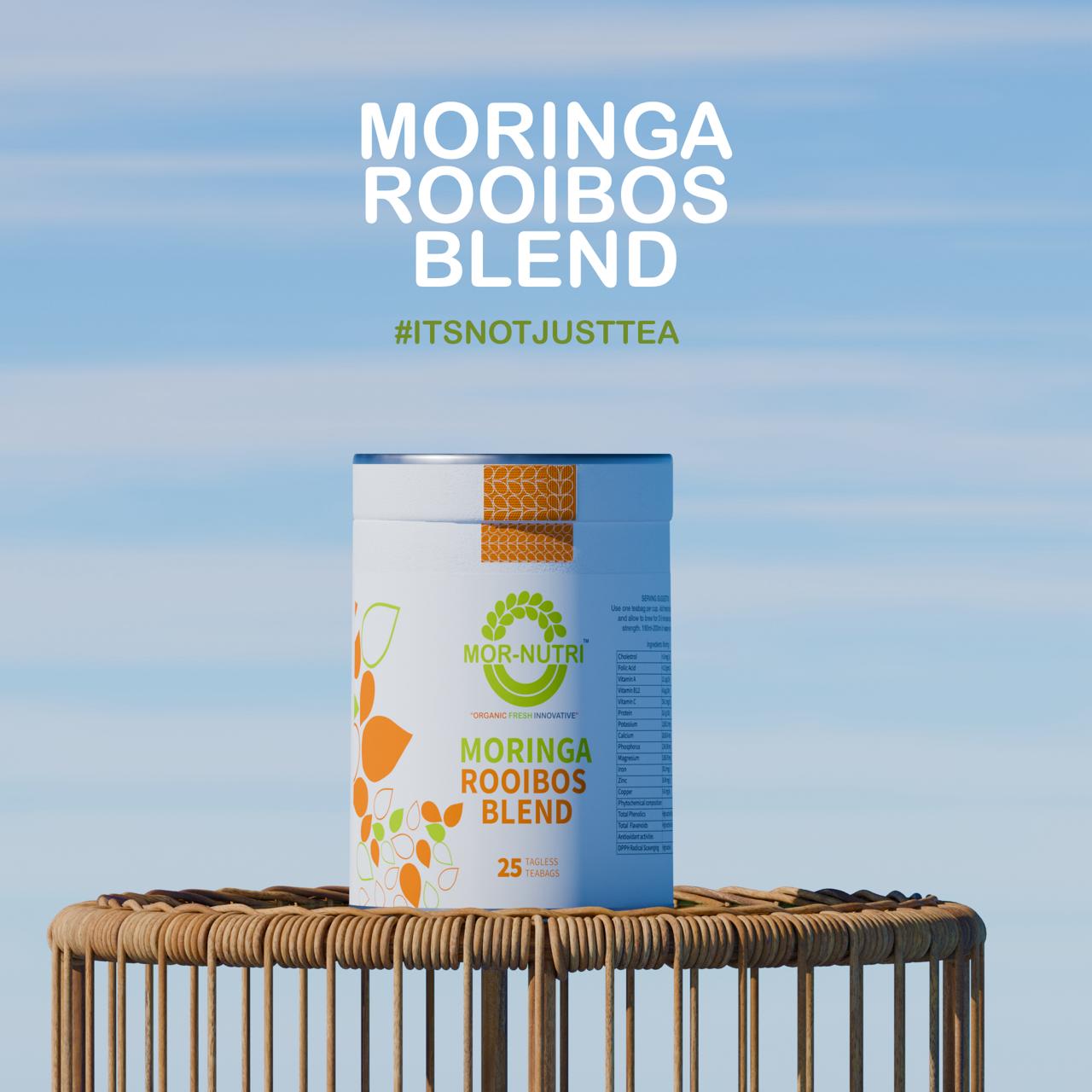
Mor Nutri maximises resource efficiency through a circular production model where every part of the moringa tree serves a purpose. Leaves are dried for tea blends and nutritional supplements, seeds are processed for oil extraction, and all byproducts are returned to the soil through composting, achieving a 100% utilisation rate. This integrated approach eliminates waste while enhancing soil health and productivity.
Innovative Product Development:
Through partnerships with research institutions, particularly under the Ubuntu Biobased Innovation programme, the company develops distinctive product formulations that combine Moringa with complementary indigenous ingredients. These formulations enhance taste profiles and nutritional benefits, creating unique offerings unavailable from competitors. Rigorous testing and quality control ensure consistent product excellence.
Multi-Channel Distribution:
The business employs a diversified distribution strategy that includes:
- Direct sales through a network of independent distributors operating on a multi-level marketing model
- Institutional relationships with the hospitality sector, particularly lodges and boutique hotels
- Corporate wellness contracts with organisations seeking to support employee health
- Planned e-commerce capabilities to enable direct-to-consumer sales nationally
Community Partnerships:
Structured relationships with local cooperatives create mutual value. These partnerships include formal purchasing agreements for indigenous ingredients, technical support for harvesting and preparation, and knowledge transfer. The partnerships focus on women's groups, creating economic opportunities for a traditionally marginalised demographic.
Educational Initiatives:
Beyond its core commercial activities, Mor Nutri conducts nutritional awareness and agricultural knowledge-sharing programmes in surrounding communities. These initiatives enhance understanding of indigenous nutritional resources and sustainable farming approaches, extending impact beyond direct business operations.
This integrated solution addresses the identified problems through a model that simultaneously generates commercial returns, environmental benefits, and social impact rather than treating these dimensions as separate considerations or afterthoughts.
WHAT ARE THE BIODIVERSITY AND CONSERVATION PRIORITIES OF THE PROJECT?
Mor Nutri has established clear biodiversity and conservation priorities that are systematically integrated throughout its operations and strategic planning:
Soil Health and Ecosystem Functioning:
The company prioritises soil as a living ecosystem rather than a growing medium. Organic cultivation practices enhance microbial diversity and activity, supporting robust soil food webs that underpin broader ecosystem health. Regular soil testing monitors organic matter content, which has increased by approximately 15% in cultivation areas since implementation. These practices support diverse plant communities and beneficial insects such as pollinators and predatory species that control pests naturally.
Water Resource Protection:
Water conservation extends beyond efficiency measures to include explicit protection of water resources. Buffer zones along seasonal water courses prevent erosion and filtrate runoff, protecting aquatic ecosystems in the Lepelle River catchment. The company's water-efficient practices save an estimated 1 million litres annually compared to conventional crops, reducing pressure on stressed water resources.
Indigenous Species Conservation:
Mor Nutri actively supports the conservation of indigenous flora through its sourcing practices. Incorporating indigenous ingredients like prickly pear creates economic incentives for their preservation rather than replacement with exotic crops. This approach aligns conservation with livelihood opportunities, creating sustainable protection mechanisms.
Pollinator Support:
Recognising the critical importance of pollinators for ecosystem functioning, the company maintains dedicated flowering plants throughout its cultivation areas. These plants provide nectar and pollen resources year-round, supporting native bee populations and other beneficial insects. This approach enhances natural pollination while reducing dependency on managed honeybees.
Carbon Sequestration:
Moringa trees serve as effective carbon sinks, with each mature tree sequestering approximately 22kg of CO2 annually. With 2,000 trees currently planted and additional planting scheduled, the operation makes a meaningful contribution to carbon drawdown. The perennial nature of moringa cultivation means this sequestration continues for decades with minimal disturbance.
Habitat Creation and Connectivity:
Buffer zones and boundary plantings create wildlife corridors that enhance connectivity between fragmented habitat patches. These areas provide resources for small mammals, birds, and reptiles, indirectly supporting larger species by maintaining prey populations. The diverse agroecosystem creates significantly more biodiversity than conventional monoculture farming.
Waste Reduction:
The zero-waste philosophy eliminates agricultural waste that would otherwise contribute to landfill pressures. Composting of all byproducts returns nutrients to the soil while supporting decomposer organisms essential for ecosystem functioning. This circular approach mimics natural nutrient cycling processes.
These priorities are regularly assessed through structured monitoring protocols developed in collaboration with the Agricultural Research Council, ensuring accountability and continuous improvement in biodiversity conservation outcomes.
WHAT ARE THE EXPECTED OUTCOMES / IMPACT? (Example: Economic Development, Job Creation, Conservation)
Mor Nutri's integrated approach is designed to deliver quantifiable outcomes across economic, environmental, and social dimensions:
1. Economic Impact:
- Creation of 20 additional direct jobs by 2027, with 90% youth representation and 70% female employment, addressing critical unemployment challenges in Limpopo Province
- Generation of R1.5 million in additional community income through direct employment and structured purchasing from cooperatives by 2027
- Development of three women-led cooperatives with 30% average income growth through stable purchasing commitments
- Establishment of market access for small-scale farmers, creating income diversification opportunities
- Skills development for 50+ individuals annually in sustainable agriculture, processing, and marketing
- Tax revenue contribution exceeding R143,000 annually by 2027, supporting local government services
2. Environmental Impact:
- Sequestration of 50+ tonnes of CO2 annually through moringa cultivation, with cumulative impact reaching 88 tonnes by 2027
- Improvement of soil health across 50 hectares through organic practices, with a 15% average increase in soil organic matter
- Conservation of 1 million+ litres of water annually through efficient cultivation practices compared to conventional agriculture
- Elimination of chemical runoff into local waterways through organic cultivation methods
- Maintenance of habitat for 20+ pollinator species, supporting broader ecosystem resilience
- Zero waste to landfill through comprehensive circular economy approaches
3. Social Impact:
- Distribution of 100,000 nutrient-rich product units annually by 2027, addressing nutritional deficiencies in communities
- Reduction in school absenteeism by approximately 10% in communities where moringa supplements are consistently used
- Creation of viable rural livelihoods that reduce urban migration pressures
- Enhancement of women's economic empowerment, with female participants reporting 40% greater decision-making authority within households
- Transfer of sustainable agricultural knowledge to 200+ community members annually through training initiatives
- Preservation and commercial application of Indigenous knowledge systems, creating intergenerational knowledge transfer
4. Biodiversity Impact:
- Enhanced habitat for 5+ species of native pollinators, directly supporting ecosystem services
- Increased soil biodiversity, including earthworms, fungi, and beneficial microorganisms
- Protection of water resources through reduced extraction and elimination of chemical inputs
- Support for avian diversity through habitat creation, with 15+ bird species documented in cultivation areas
- Conservation of Indigenous plant varieties through economic incentivisation
- Demonstration of biodiversity-positive agricultural approaches that can be replicated regionally
These impacts are monitored through structured assessment protocols to ensure accountability and continuous improvement. The framework includes both quantitative metrics and qualitative assessments gathered through stakeholder feedback, creating a comprehensive understanding of the enterprise's contribution to sustainable development.
WHAT BARRIERS OR CHALLENGES DOES THE PROJECT FACE?
Despite its substantial potential, Mor Nutri faces several strategic challenges that require thoughtful management:
Market Competition:
The premium health food market has attracted increasing competition, with larger brands leveraging significant marketing budgets and established distribution networks. Mor Nutri addresses this challenge through:
- Differentiation based on scientifically validated nutritional superiority
- Development of unique product formulations unavailable from competitors
- Creating authentic sustainability credentials that resonate with conscious consumers
- Emphasising local provenance and community impact in branding
Supply Chain Reliability:
Working with small-scale producers and cooperatives creates occasional supply consistency and quality standardisation challenges. The company mitigates these challenges through:
- Diversified sourcing relationships that reduce dependency on any single supplier
- Ongoing technical support and training for cooperative partners
- Building buffer inventory of shelf-stable ingredients during peak availability
- Clear quality standards and fair pricing that incentivise consistent production
Climate Risks:
As an agricultural enterprise, Mor Nutri faces inherent vulnerability to climate variability, which includes drought cycles, extreme weather events, and shifting growing conditions. The business builds resilience through the following:
- Selection of drought-resistant moringa varieties specifically adapted to Limpopo conditions
- Implementation of water-efficient cultivation practices and rainwater harvesting
- Diversification of growing areas to spread geographical risk
- Climate-smart agricultural practices that enhance adaptive capacity
Scaling Challenges:
Current production capacity constrains growth potential despite strong market demand. Equipment limitations and logistical bottlenecks represent significant barriers to scaling, which the company plans to address through:
- Strategic equipment investments to increase processing capacity by 50%
- Acquisition of dedicated delivery vehicles to enhance distribution reliability
- Development of e-commerce capabilities to bypass physical distribution constraints
- Implementation of inventory management systems that optimise production planning
Regulatory Compliance:
Navigating the complex regulatory landscape for food products requires substantial resources, particularly for a small enterprise. Mor Nutri manages this challenge through:
- Partnership with the Agricultural Research Council for compliance guidance
- A phased approach to certification, prioritising essential standards
- Collaboration with industry associations for regulatory updates
- Investment in staff training on quality control and documentation
Working Capital Constraints:
Limited access to working capital restricts the company's ability to fulfil larger orders and invest in growth opportunities. This constraint is addressed through:
- Negotiation of favourable payment terms with institutional clients
- Implementation of efficient inventory management to optimise cash flow
- Development of a tiered growth strategy that prioritises high-margin opportunities
- Strategic use of advance deposits for large orders
Market Education:
Moringa remains unfamiliar to many South African consumers, requiring ongoing educational marketing. The company addresses this awareness gap by:
- Conducting product samplings at strategic locations
- Developing educational content about Moringa's benefits
- Leveraging partnerships with wellness professionals
- Creating compelling storytelling around Indigenous nutritional wisdom
These challenges, while significant, are manageable through the strategic approaches outlined and the requested investment support. The company's leadership has demonstrated creativity and resilience in navigating previous obstacles, building confidence in their ability to address future challenges effectively.
WHAT IS THE NATURE OF CAPITAL INVESTMENT OR SUPPORT REQUIRED?
Mor Nutri seeks a total investment of R770,256 to capitalise on existing market traction and accelerate growth across three strategic dimensions:
1. Equipment Enhancement (R350,000):
- Two additional professional dehydrators (R150,000) to increase production capacity by 40%
- Automated packaging machine (R120,000) to improve efficiency and consistency
- Quality testing equipment (R50,000) to ensure nutritional content verification
- Storage infrastructure upgrades (R30,000) to maintain optimal inventory conditions
This equipment investment will increase production capacity by approximately 50%, enabling the company to meet growing demand from hospitality clients and expand into new market segments. The packaging automation will improve presentation consistency while reducing labour costs per unit by approximately 30%.
2. Distribution Infrastructure (R250,000):
- Two dedicated delivery vehicles (R250,000) to enhance distribution reliability and control
Acquiring dedicated vehicles will eliminate dependency on third-party logistics providers, reducing distribution costs by approximately 35% while improving delivery reliability. This enhanced control will strengthen relationships with key hospitality clients while enabling expansion into new geographical areas currently unserviced due to distribution constraints.
3. E-Commerce Development (R170,256):
- Comprehensive e-commerce platform development (R75,000)
- Digital marketing campaign implementation (R45,000)
- Product photography and content creation (R25,256)
- Inventory management system integration (R25,000)
This digital infrastructure investment will establish direct-to-consumer sales capabilities, creating a new revenue channel with higher margins than wholesale distribution. The e-commerce platform will enable national reach without proportional increases in physical distribution costs while providing valuable consumer data to inform product development.
The requested investment represents a thoughtfully balanced approach to addressing current constraints while positioning the business for sustainable growth. Each component directly contributes to increased revenue potential, enhanced operational efficiency, and strengthened market position.
IS THE PROJECT LOCATED IN A BIODIVERSITY HOTSPOT OR BIODIVERSITY-RICH AREA?
Yes, Mor Nutri operates within Limpopo Province, an area of exceptional biodiversity significance that forms part of the Savanna Biome of South Africa. This region is characterised by:
- Rich floral diversity with over 2,000 plant species, including numerous endemic varieties adapted to the region's distinctive climate and soil conditions
- Diverse mammalian fauna ranging from small antelope to iconic species like elephants in nearby protected areas
- Exceptional avian diversity with over 500 bird species documented in the broader region
- Significant reptile and amphibian communities adapted to savanna and wetland ecosystems
- Complex soil biodiversity that underpins ecosystem functioning
The location in GaMphahlele is within a mosaic landscape of savanna, thornveld, and seasonal wetlands that create diverse habitat niches. This ecological context means that agricultural practices substantially influence biodiversity outcomes, either supporting or degrading ecosystem integrity.
Mor Nutri's operations are specifically designed to enhance rather than diminish this biodiversity through:
- Maintenance of buffer zones that support native vegetation
- Implementation of organic practices that eliminate harmful chemical inputs
- Creation of diverse agricultural landscapes rather than monocultures
- Enhancing soil health that supports broader ecosystem functioning
- Conservation of water resources that maintain wetland habitat viability
The company's sustainable practices are particularly important given the increasing regional biodiversity pressures from conventional agriculture, mining activities, and climate change. By demonstrating economically viable approaches that enhance rather than degrade biodiversity, Mor Nutri creates a model for regional land use that reconciles conservation with development imperatives.
DOES THE PROJECT PROMOTE THE EXPANSION OF PROTECTED AREAS?
While Mor Nutri does not directly expand formally gazetted protected areas, its operations create effective biodiversity conservation zones through several complementary mechanisms:
Buffer Zone Establishment:
The company maintains substantial buffer zones around cultivation areas that function as de facto conservation areas. These zones support native vegetation and provide habitat for numerous species, extending protected habitat beyond formal conservation boundaries. The approach creates ecological stepping stones that enhance connectivity between formally protected areas.
Sustainable Land Use Demonstration:
By showcasing economically viable agriculture that enhances rather than degrades biodiversity, Mor Nutri influences regional land use decisions. This demonstration effect reduces pressure for conversion of natural areas to intensive agriculture, indirectly supporting protected area integrity by minimising edge effects and habitat fragmentation.
Reduced Pressure on Protected Resources:
Communities around protected areas often rely on resource extraction from these zones due to economic necessity. Mor Nutri indirectly strengthens conservation effectiveness by creating sustainable livelihoods that reduce dependency on protected area resources. The economic opportunities provided through employment and cooperative partnerships create alternatives to unsustainable resource harvesting.
Knowledge Generation:
The company systematically monitors biodiversity outcomes from its agricultural practices and generates valuable data that informs regional conservation planning. This knowledge contribution supports evidence-based decision-making about land use and protection priorities, enhancing the effectiveness of formal conservation efforts.
Stakeholder Engagement:
Through its operations and community partnerships, Mor Nutri builds constituencies that support conservation objectives. By demonstrating tangible benefits from biodiversity-positive approaches, the company cultivates conservation advocates within communities that have traditionally viewed protected areas with scepticism due to perceived economic trade-offs.
This indirect but substantive contribution to protected area effectiveness aligns with modern conservation approaches that recognise the importance of landscape-level interventions beyond formal protected boundaries. The company's model demonstrates how private sector initiatives can complement government-led conservation efforts through practices that integrate biodiversity considerations throughout business operations.
%20Ltd.jpg)