BAMBANANI COMMUNITY FARM
Investor Login Area - A Deeper Look
Bambanani Community Farm
Mpumalanga
Contact Details
Investment Range Required
R5 Million - R20 Million
Type of Investment Required
Capital Expenditure
Infrastructure Funding
Working Capital
Investment Opportunity Funding Requirement Overview
Total Financial Investment Requirement -
R6 965 000
Short Term - R1 790 000
Medium Term - R5 175 000
Funding type for Financial Requirements
Equity, Debt, Grant
Non-Financial requirements
Technical services
Capacity building
CURRENT AND CORE OPERATIONS
Wildlife Economy
Core Operations
- Ranching and related value chain
Activities
Cattle and goat farming
Bioprospecting
Core Operations
- Cultivation & Harvesting
Activities
Aviaries, birding and walking trails
Ecotourism
Core Operations
- Ecotourism activities
Activities
Community vegetable gardens
Fire wood from forestry plantation
INVESTMENT OPPORTUNITIES
Total Infrastructure Funding - R5 800 000
Short Term - R1 000 000
Medium Term - R4 800 000
Item: Livestock for breeding
Description: Purchase cattle and small livestock to expand the capacity for the abattoir and sustainable economic activity.
Amount: R900 000
----------
Item: Abattoir & Tannery
Description: Construct anAbattoir and tannery will serve as an integratinghub around which a variety of complementary community business ventures will beestablished including leather crafts
Amount: R2 300 000
----------
Item: Aviary and bird-watching hides
Description: Construction of more aviaries, bird-watching hides and wetland conservation.
Amount: R850 000
----------
Item: Infrastructure Development
Description: Building fences and roads for security and access, supplying water.
Amount: R600 000
Total Capital Funding - R1 125 000
Short Term - R750 000
Medium Term - R375 000
Item: Vehicles
Description: Purchase 2 refrigerated delivery vehicles for meat and fresh produce.
Amount: R1 005 000
----------
Item: Fixtures and Fittings
Description: Upgrade and maintenance of current facilities.
Amount: R80 000
Total Working Capital- R40 000
Short Term - R40 000
Item: Training and development
Description: Revolving facility for training, skills development, and capacity building to expand the skills of staff, management and community members involved in all facets of the business.
Amount: R40 000
current annual revenue and operating expenses
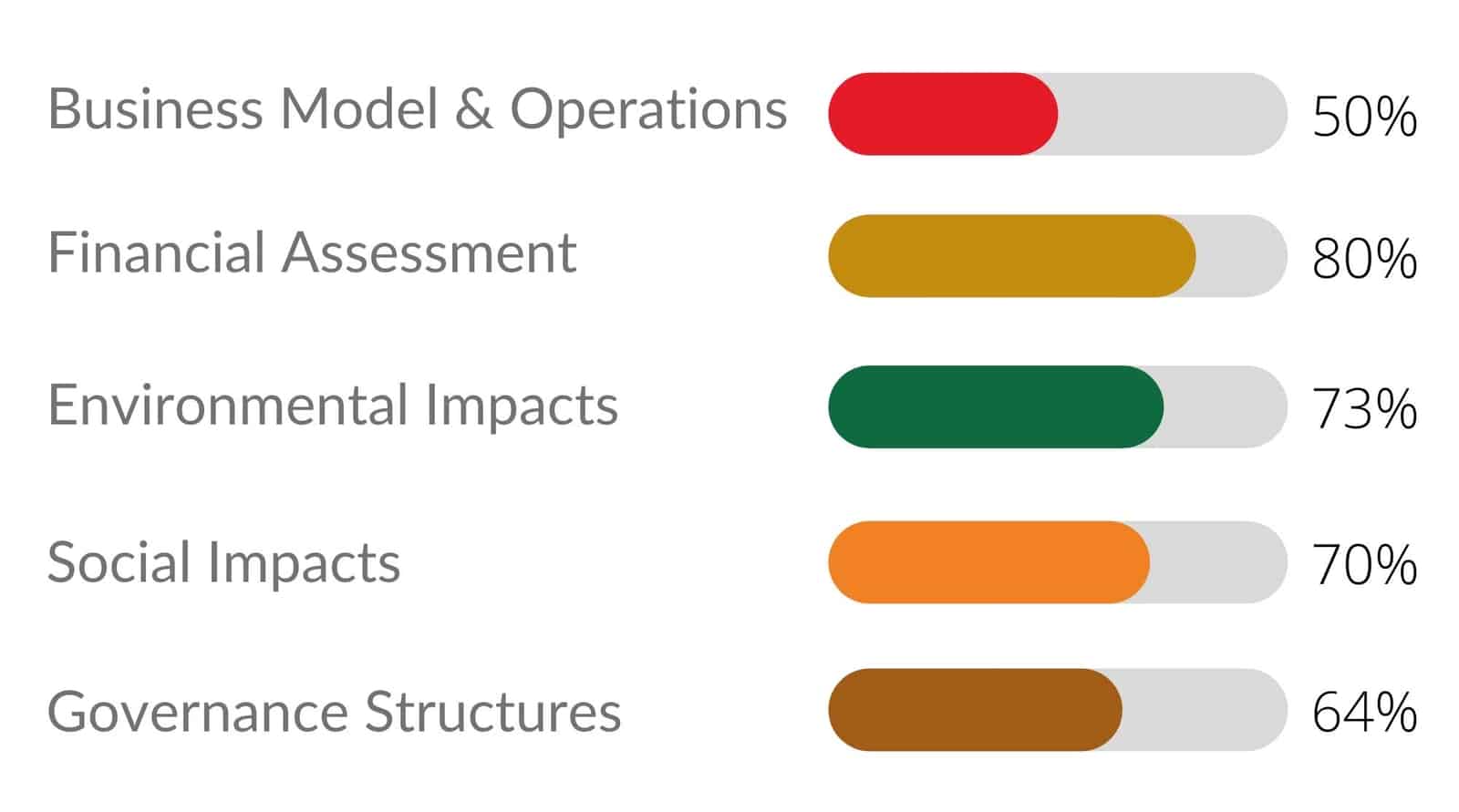
Investee Readiness
Investee Readiness Scores
Investee Readiness Download Document
Download Documents
AYANGO BIODIESEL
Investor Login Area - A Deeper Look
AYANGO BIODIESEL
Eastern Cape
Contact Details
Investment Range Required
R500 000 - R5 Million
Type of Investment Required
Debt
Grant
Investment Opportunity Funding Requirement Overview
Total Financial Investment Requirement -
R2 907 741
Funding type for Financial Requirements
Debt, Grant
Non-Financial requirements
Capacity building
CURRENT AND CORE OPERATIONS
Ecological Infrastructure
Core Operations
- Land/veld management
- Invasive alien plant clearing and harvesting
- Invasive alien and plant benefaction
- Water security
INVESTMENT OPPORTUNITIES
Total Infrastructure Funding - R663 000
Item: Warehouse plus engineering
Description: To keep the firewood so that it does not get damaged by the rain while at the same time use it work during rainy days
Amount: R350 000
----------
Item: Fencing and labour
Description: To buy fence that will protect the firewood from the thieves and livestock
Amount: R303 000
Total Infrastructure Funding - R1 483 000
Item: 30 ton truck and a trailer
Description: Truck to transport the firewood from the Grahamstown working site to Coega IDZ to the customer’s premises, where the firewood will be exported from
Amount: R954 000
----------
Item: Tractor
Description: The tractor will collect the wood from where the trees will be cut from and transport it to where the wood will be converted into firewood. The firewood will then be transported by the tractor to the warehouse/storeroom.
Amount: R409 000
----------
Item: Chainsaws x 12 (MS370 and MS210)
Description: Chainsaws will be used to cut the trees and wood
Amount: R72 000
----------
Item: Personal protective equipment (e.g. overalls, safety boots, goggles, gloves, etc.)
Description: PPE will be worn by the staff members to prevent them from injured while at the same time they will assist to work effectively
Amount: R48 000
----------
Item: Herbicide
Description: Herbicide will be needed for follow up activities
Amount: R0 as this will be an in-kind contribution by the Department of Forestry, Fisheries and the Environment
Total Infrastructure Funding - R761 740
Item: Diesel for a 32 ton truck and tractor, and petrol and oil for chainsaws
Description: Diesel, petrol and oil will be used for 3 months before the company paid by the customers
Amount: R329 700
----------
Item: Wages and salaries
Description: The employees and the management will be paid for 3 months since the firewood will be left dry for 2 months before transported to their final destination
Amount: R432 040
current annual revenue and operating expenses
Investee Readiness
Investee Readiness Scores
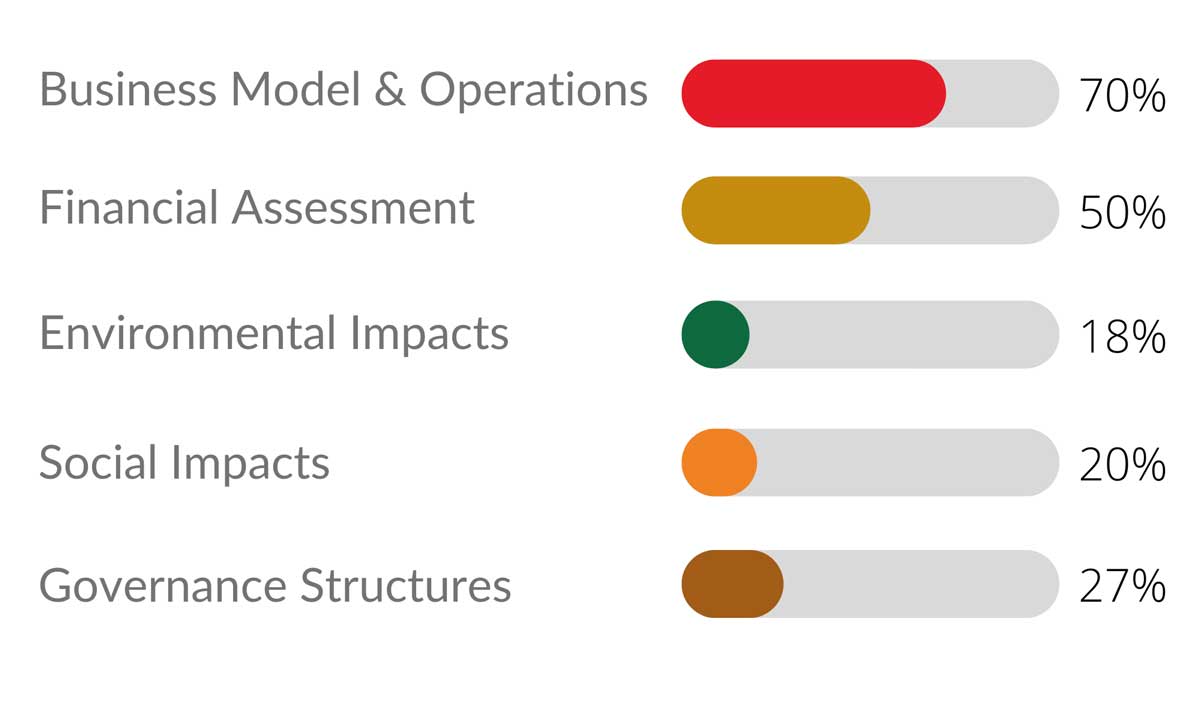
Investee Readiness Download Document
Download Documents
Small Enterprise Development Agency (SEDA)
Organisational Profile
The Small Enterprise Development Agency (SEDA) is an agency of the Department of Small Business Development. SEDA was established in December 2004, through the National Small Business Amendment Act, Act 29 of 2004.
It is mandated to implement the government's small business strategy; design and implement a standard and common national delivery network for small enterprise development; and integrate government-funded small enterprise support agencies across all tiers of government.
SEDA’s mission is to develop, support and promote small enterprises throughout the country, ensuring their growth and sustainability in co–ordination and partnership with various role players, including global partners, who make international best practises available to local entrepreneurs.
Type of Investor
- Government Support
Environment Protection and Infrastructure Programme (EPIP)
Organisational Profile
EPIP programmes focus on infrastructure related projects that contribute towards the environmental protection, conservation and sustainability, whilst creating work opportunities, and providing skills development to enable beneficiaries to secure permanent employment. The Department of Forestry, Fisheries and the Environment, through the Environmental Protection and Infrastructure Programmes (EPIP), is implementing projects that address a myriad of environmental challenges whilst creating the much needed jobs in the environmental sector under the auspices of the Expanded Public Works Programmes (EPWP).
Type of Investor
- Government Support
Agence Française de Développement (AFD)
Organisational Profile
The Agence Française de Développement (AFD) funds, supports and accelerates the transitions to a fairer and more sustainable world.
Focusing on climate, biodiversity, peace, education, urban development, health and governance, AFD carry out more than 4,000 projects in France’s overseas departments and territories and another 115 countries. In this way, they contribute to the commitment of France and the French people to support sustainable development goals.
Type of Investor
- Country-level Development Finance Institutions
Department for International Development (DFID)
Organisational Profile
DFID’s relationship with South Africa has now transitioned to a development partnership model built around mutually agreed priorities. This engagement is led by the Development Partnerships Unit based in the British High Commission, Pretoria. It is supported by a partnerships programme which works with South African institutions to strengthen their development role in Africa, in areas including tax capacity building, tackling climate change and service delivery monitoring. The programme also works with the South African government to support its role as an African representative in global institutions such as the G20, to help develop international agreements which better address the needs of the poor in Africa.
Type of Investor
- Country-level Development Finance Institutions
Swiss Development Fund
Organisational Profile
The Swiss regional programme in Southern Africa contributes to the reduction of poverty and vulnerability. With its engagement, Switzerland contributes to enhanced food security for smallholder farmers and to the reduction of new HIV infections.
Type of Investor
- Country-level Development Finance Institutions
DEVELOPMENT BANK OF SOUTHERN AFRICA (DBSA)
Organisational Profile
As one of the leading Development Finance Institutions in Africa, DBSA consistently commits itself to drive efforts which accelerate inclusive development on the African continent by expanding access to development finance. Acquired finance is used to implement integrated and sustainable infrastructure developments more effectively. To ensure that DBSA achieves this goal, they have adopted a strategy that prioritises financial sustainability and strong governance, while accelerating and enhancing development impact. The intent is to mobilise infrastructure development with the purpose of delivering socio-economic growth that is shared and equitable for African countries. At the core of their strategy lies a programmatic approach, which allows them to solve pressing socio-economic challenges at scale and push the implementation in accordance with the government’s policies and procedures.
Type of Investor
- Development Finance Institutions
Global Environment Facility (GEF)
Organisational Profile
The Global Environment Facility was established on the eve of the Rio Earth Summit to tackle our planet’s most pressing environmental problems. The GEF is the largest multilateral trust fund focused on enabling developing countries to invest in nature, and supports the implementation of major international environmental conventions including on biodiversity, climate change, chemicals, and desertification. It brings together 184 member governments in addition to civil society, international organisations, and private sector partners. Through its Small Grants Programme, the GEF has provided support to more than 26,000 civil society and community initiatives in 135 countries.
Type of Investor
- Conservation Funds