One of the most effective interventions of the partnership is the regular learning exchange workshops, which have included topics such as fire management in grasslands, alien plant management, environmental outreach, aquatic monitoring, Eco ranger functions, career development and biodiversity stewardship incentives. The partners are also producing ‘best practice’ media for use by a wider audience.
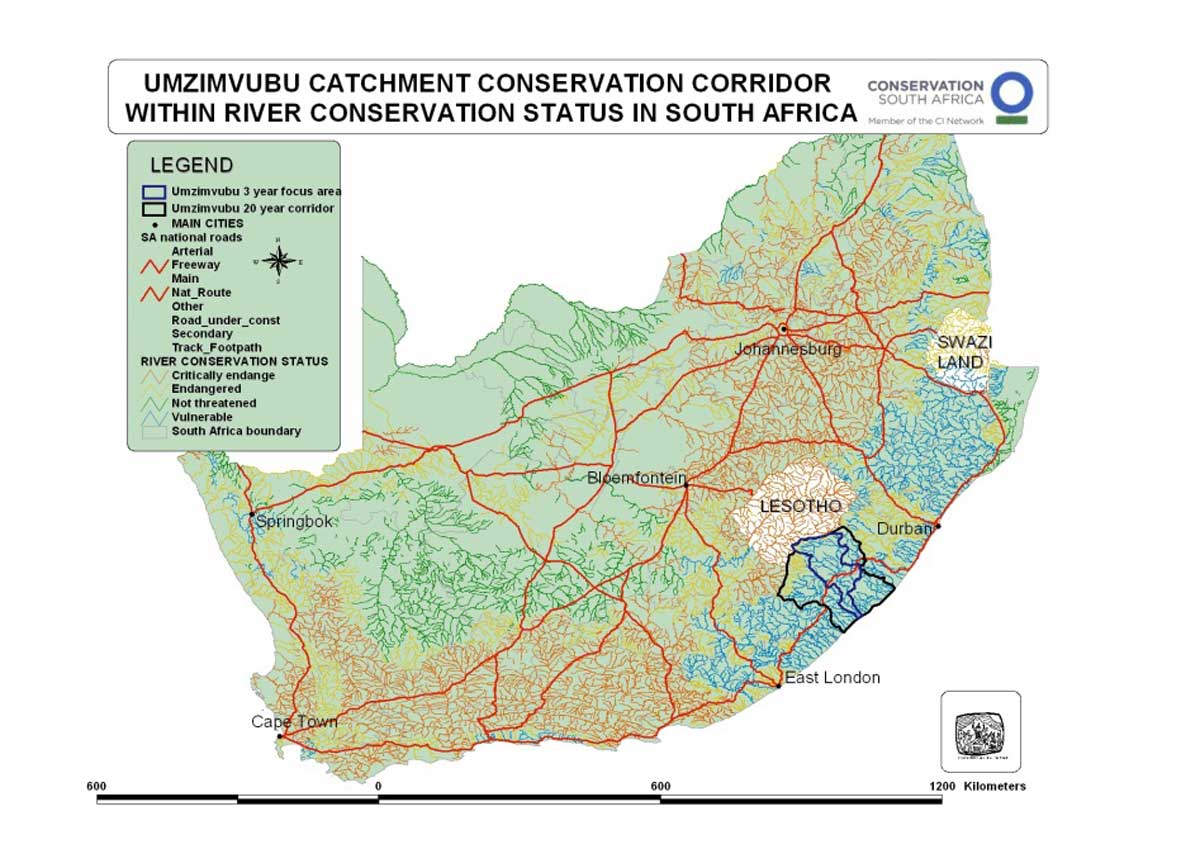
The Mzimvubu River is one of South Africa’s most important free-flowing rivers. With its source in the southern Drakensberg near Matatiele, it flows over 400 km to its estuary on the Indian Ocean at Port St Johns. It is designated as ‘vulnerable’ within a River Freshwater Ecosystem Priority Area. The Mzimvubu catchment also falls within the Maputaland–Pondoland–Albany Hotspot, a region of high biodiversity and endemism. The upper reaches of the river catchment were identified as a Key Biodiversity Area based on the high levels of endemism and importance of the area as a water source.
The catchment spans almost 20 000 km2 of the poorest rural areas of the Eastern Cape Province. Communal land tenure covers up to 70% of the catchment and this land is in a state of worsening degradation. The highly diverse grassland and forest matrix of the catchment are threatened by poor land management practices and land cover transformation for development such as access roads and housing.
Extensive erosion due to compromised groundcover is a problem in the catchment, resulting in high sediment loads in the river. The area also has severe alien plant invasions, with an estimated 20% of the catchment under threat from species such as black wattle. Alien plants affect the water flow in the river, grassland integrity, grazing availability, soil erosion rate and the biodiversity of the natural ecosystems.